
What Shoes to Wear With Wide-Leg Jeans in Winter
Wide-leg jeans can be comfortable in winter, but the hem changes how shoes work. A shoe that looks balanced with cropped denim may disappear under a full-length pair, while a bulky boot can make the fabric bunch at the ankle. Start with the weather, the length of your jeans, and how much of the shoe you want to show. Then choose the shape.
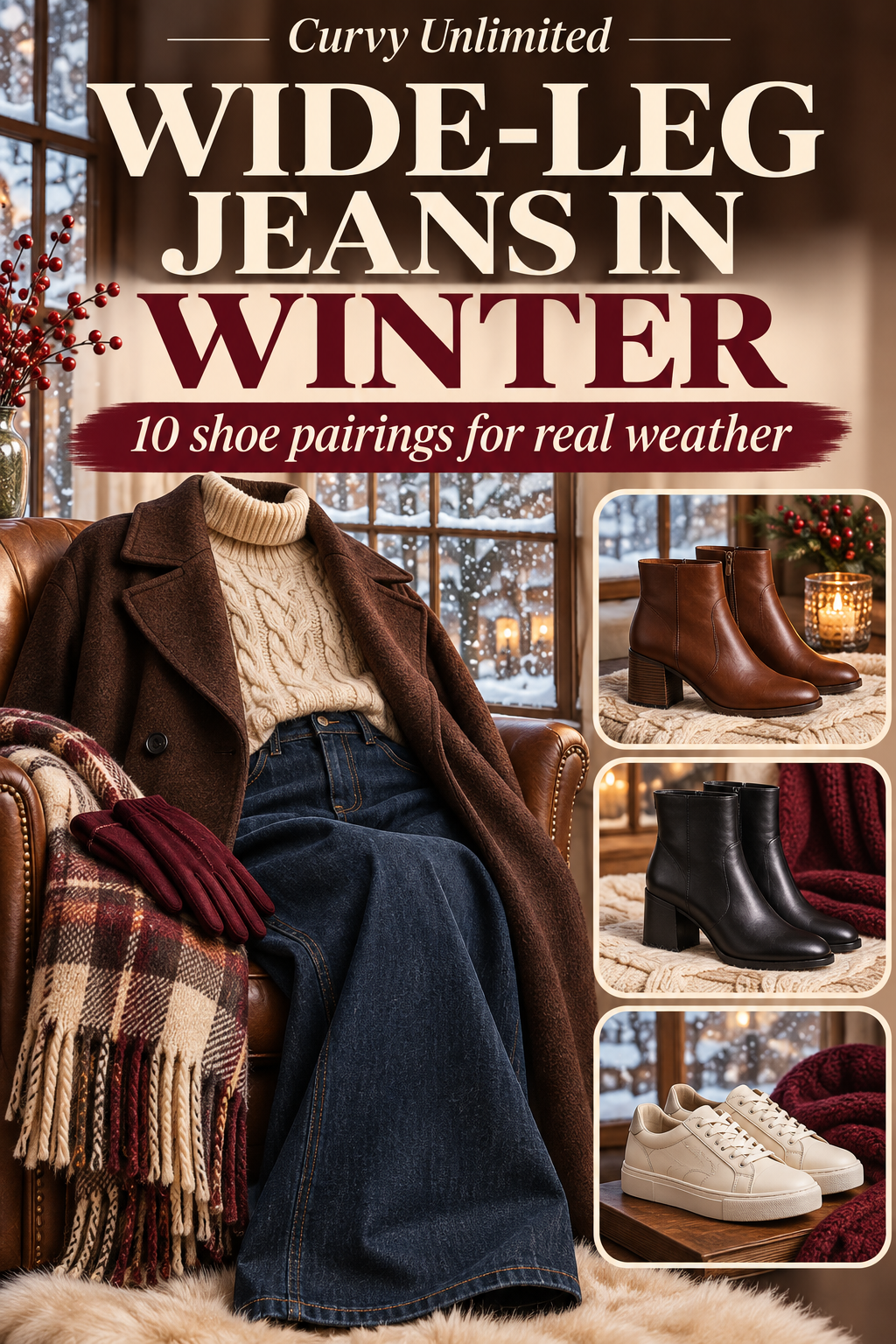
For midsize and plus-size bodies, there is no single proportion rule to follow. The practical goal is a hem that moves freely, a waistband that stays comfortable when you sit, and footwear you can walk in. These ten pairings give you options for dry days, wet sidewalks, casual errands, and dressier plans.
First, check the hem
Try the jeans on with the exact shoes you intend to wear. A full-length hem can skim the top of a boot without dragging; a cropped hem can intentionally reveal the ankle or boot shaft. If the fabric pools beneath your heel, it will pick up water and grit. Consider hemming a favorite pair for the shoes you reach for most often rather than expecting one inseam to work with every heel height.
Look at the opening, too. A wide but softly draped leg will fall differently from a rigid, very wide cut. With a chunkier shoe, let some of its toe or sole show. With a slim shoe, a shorter hem or a crease in the denim can keep the pairing visually clear. The point is to see the outfit as a whole, not to make your legs look a prescribed way.

Ten winter shoes to wear with wide-leg jeans
1. Sleek ankle boots for everyday polish
A close-fitting ankle boot is the easiest place to start. Its shaft slips under the denim and avoids a bulky ridge around the calf. Choose a rounded, almond, or softly pointed toe according to your comfort; the toe can peek out when you walk. A dark boot with dark jeans creates a quiet continuous line, while a tan boot gives blue denim more contrast.
For a practical outfit, add a fine-knit sweater and a coat that ends above or below the widest part of the jeans. If the ankle boot has a heel, test the hem again: a pair altered for sneakers may become too short. A sturdy, low heel often gives enough lift without turning an ordinary day into a balancing exercise.
2. Lug-sole boots for wet, messy days
When sidewalks are damp, traction matters more than a delicate profile. A lug-sole ankle boot gives a grounded finish to wide denim. Keep the shaft relatively smooth if the jeans are soft and drapey; thick hardware and a very loose shaft can catch the hem. A cropped or slightly shorter jean lets the sole show and keeps fabric out of puddles.
Try a ribbed sweater, a quilted jacket, and a boot in black, chocolate, or deep olive. Check the actual sole and upper for your climate: a chunky tread alone does not mean a shoe is waterproof. If the forecast calls for heavy rain or snow, choose footwear built for that condition and protect the denim hem.
3. Chelsea boots for a clean, compact shape
A Chelsea boot combines a neat upper with a pull-on shape. It works especially well under a long, straight-falling wide leg because the elastic side panels do not add much bulk. A medium-thickness sole is a useful middle ground between a slim fashion boot and a heavy winter boot.
Pair indigo jeans with a cream turtleneck and a camel coat, or wear black denim with a charcoal cardigan. If a Chelsea boot feels tight across the instep, look for a different last or a wider fitting rather than sizing up so far that your heel slips. Socks also change fit; take the winter pair you plan to wear when trying boots on.
4. Weather-ready lace-up boots for cold travel days
Lace-up boots are useful when you need to adjust the fit around your foot and ankle. They can anchor a relaxed, full-width jean and a substantial coat. Let the toe and part of the sole remain visible; otherwise the outfit can look as if the trousers end abruptly. A hem that sits just above the ground is both cleaner and easier to walk in.
For an airport or outdoor market, use a soft long-sleeve layer, a zip cardigan, and a coat you can remove. Choose a boot based on the actual temperature and conditions, not simply its winter styling. Warm socks, traction, and the ease of getting the boot on and off may matter more than an extra inch of heel.
5. Leather or leather-look sneakers on dry days
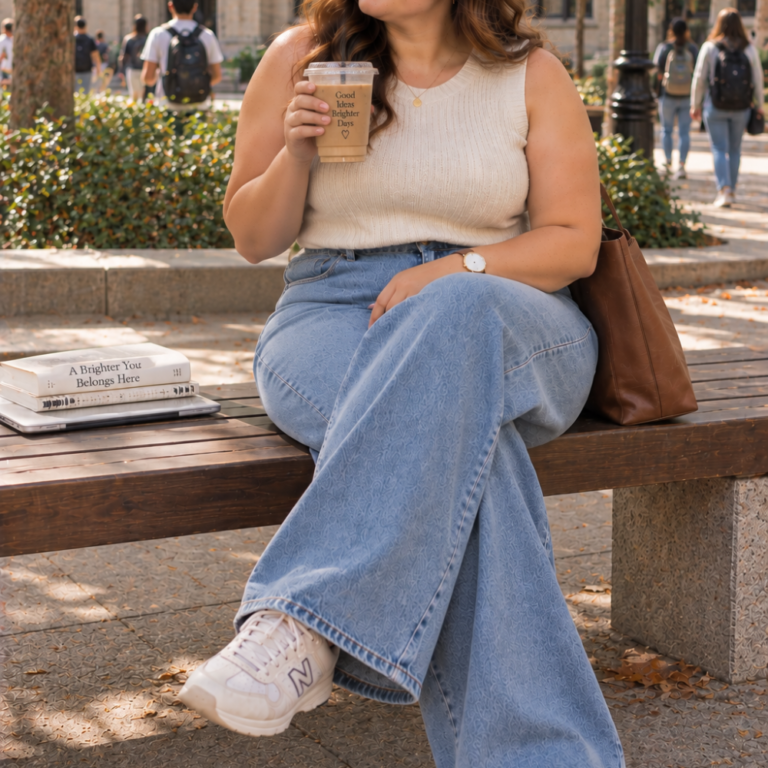
Sneakers are still a winter option where the ground is dry. A structured low-top with a visible toe and sole can balance a relaxed leg without making the outfit feel overly sporty. Cream sneakers soften a dark outfit; a deep brown or black pair is easier to coordinate with a darker coat and bag.
Wear them with a fitted tee or fine-knit top, wide-leg jeans, and a long cardigan. If you prefer a roomier top, define the waist with a partial tuck only if it feels comfortable; an open jacket can also create shape. Avoid letting the hem sit beneath the sneaker sole, especially in rain. Canvas sneakers may feel cold and absorb moisture, so choose the material for the day.
6. Retro running shoes for a casual outfit
A retro runner has more visual texture than a plain low-top. That makes it useful with simple blue jeans and a solid sweater. Choose a pair whose toe can be seen beneath the hem, and keep the rest of the look calm: one color from the shoe can appear again in a scarf or knit, but exact matching is unnecessary.
A cropped wide leg can make the shoe a deliberate feature. With a full-length pair, watch that a thick sole does not lift the back of the denim unevenly. Try the outfit in motion as well as in a mirror. If the hem catches underfoot on stairs, shorten the denim or switch to a lower-volume shoe.
7. Loafers with warm socks for mild winter weather
Loafers can bridge jeans and a smarter office outfit in a mild climate. A substantial leather or leather-look loafer is more visible under wide denim than a very thin flat. Choose a cropped hem to show a deliberate strip of sock, or a longer hem that nearly meets the vamp. Neither requires bare ankles in winter.
Try black loafers, charcoal socks, dark jeans, a soft shirt, and a knit vest or blazer. The sock should feel comfortable inside the shoe, with enough room at the toes. This is a dry-day pairing; a loafer is not a substitute for a weatherproof boot when ice, deep puddles, or snow are involved.
8. Low block-heel boots for dinner or work
A block heel adds height while providing a broader base than a narrow heel. It can keep full-length jeans from grazing the pavement and gives a dinner outfit an intentional finish. Try a softly pointed or almond toe if you want more of the boot to appear beneath the fabric. The shoe should still have enough toe room for your foot; a sharp-looking toe need not pinch.
Wear a draped blouse, dark wide-leg jeans, and a cropped jacket for an evening out. Check where the jacket ends when you sit and whether the jeans pull at the hips. If a heel changes your posture or pace uncomfortably, a polished flat boot delivers the same dress-code effect without requiring it.
9. Western-inspired boots for a little personality
A restrained Western boot can add texture without taking over the outfit. A gently angled toe and modest heel often show beneath a wide hem. Choose a smooth shaft that the denim can pass over; tall decorative pull tabs may create bumps in a softer jean. A pair in cognac or black works with simple knits and a plain coat.
Keep the rest of the outfit edited: blue jeans, a tucked or untucked lightweight sweater, and a wool-look coat are enough. You do not have to build a themed outfit around the boot. If the boot has a taller shaft, sit down in the jeans to ensure the fabric does not catch or pull at the knee.
10. Tall boots under wide-leg jeans for extra coverage
Tall boots can work under sufficiently wide jeans when you want more leg coverage. The critical check is the shaft: if it presses against your calf or creates visible ridges through the denim, try a softer or roomier boot. This is a practical option for cold weather, but it requires a jean wide enough to move easily over the boot.
Try dark denim, a close-fitting knit, and a long coat. The tall boot itself will be mostly hidden, so choose it for warmth, comfort, and walking conditions rather than expecting decorative details to show. If you want the boot visible, switch to a cropped jean or a different bottom instead of forcing a tucked wide leg.

Choose by weather and occasion
For a dry casual day, sneakers or retro runners are easy choices. For mild workdays, loafers or Chelsea boots look considered without feeling formal. For wet sidewalks, prioritize an appropriate tread and a shorter hem. For dinner, a low block heel or sleek boot can give the jeans a dressier finish. No shoe category is automatically suitable for every winter climate, so read the footwear’s care and weather guidance before relying on it outdoors.
Denim weight matters as much as shoe shape. Heavy rigid denim can stand away from a slim ankle boot; a soft fluid jean may drape over a chunkier shoe. If you want to compare proportions, take a front and side photo in the same jeans with two shoe options. The better pairing is the one that hangs cleanly and lets you move comfortably.
Fit details that make the pairing easier
If the waistband fits standing but digs in when you sit, address the jeans fit before choosing a taller shoe. Check the rise, stretch, and room through the hip and thigh. A wider leg does not guarantee ease at the waist. Midsize and plus-size ranges also vary by brand, so actual garment measurements and a seated try-on are more useful than the size label alone.
Winter socks can alter boot fit. Try shoes later in the day if your feet tend to swell, and leave enough space for your toes. If you rely on orthotics or need a wider width, prioritize those requirements first. An elegant pairing loses its usefulness if you cannot wear it beyond a photo.
For more general, year-round options, see what shoes to wear with wide-leg jeans. If you’re still deciding on the denim itself, our wide-leg jeans styling guide covers outfit balance beyond footwear.
The easiest starting point
Begin with the shoes you already own and choose jeans that clear the ground in them. A smooth ankle boot, a practical weather boot, and a dry-day sneaker cover most ordinary winter plans. Add a dressier option only if your schedule calls for it. A clear hem and a comfortable fit will do more for the outfit than buying a shoe solely because it appears on a trend list.


One Comment