What Tops to Wear With Wide-Leg Pants for a Plus Size Figure
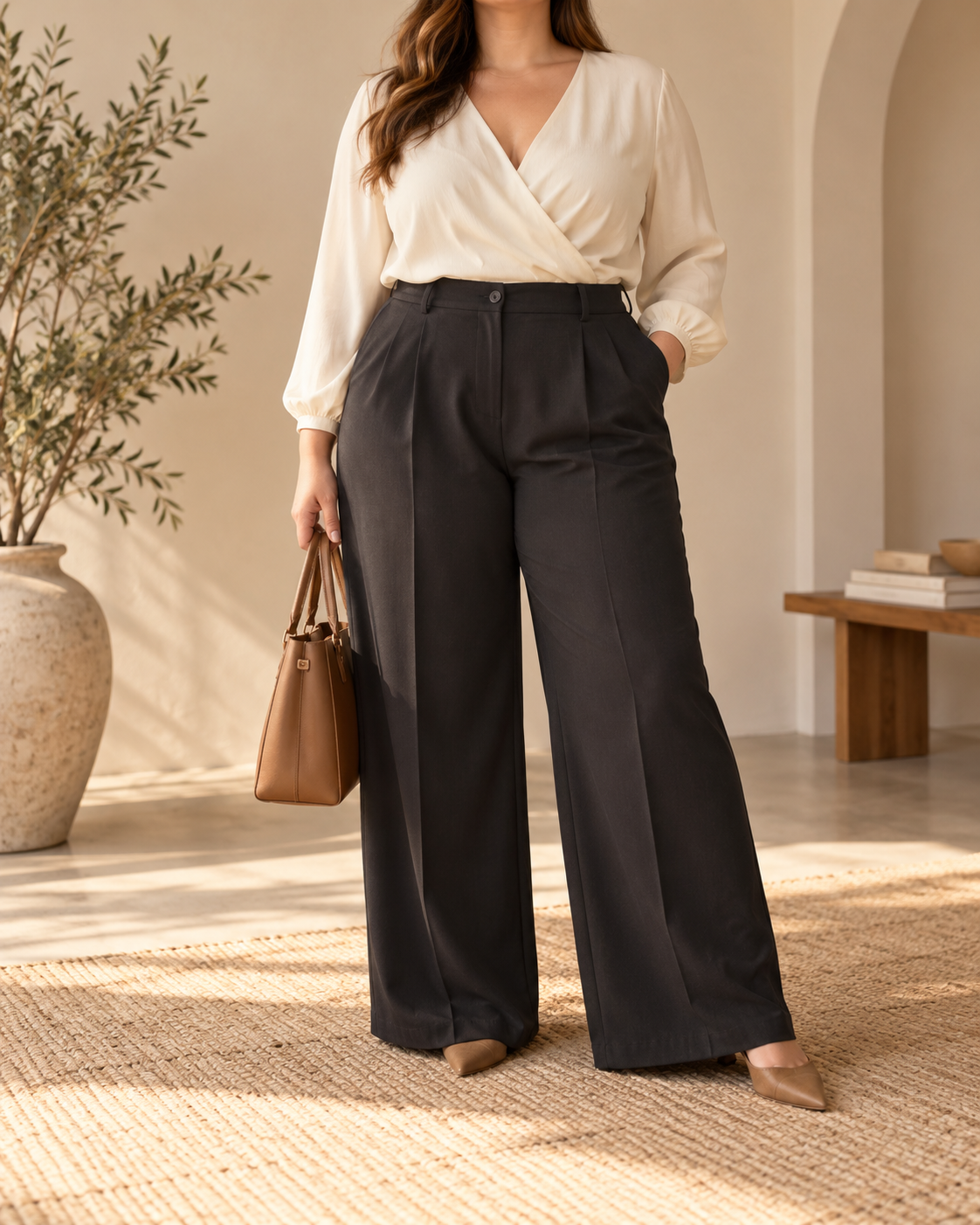
Wide-leg pants work with far more than tight or cropped tops. The useful question is whether the lengths, fabrics, and layers feel comfortable together.
Use these ideas as starting points and adjust them for the rise, drape, and structure of your own trousers.
1. Fitted Crewneck Tee
A fitted or semi-fitted tee lets the trousers be the main shape. Tuck it, front-tuck it, or leave it loose.
2. Relaxed Button-Down
Wear an oversized shirt open over a tank or button it and roll the sleeves. Side slits help it move over the hips.
3. Cropped Cardigan
A cardigan ending near the waistband naturally pairs with high-rise trousers and does not need to expose skin.
4. Fine-Knit Sweater
A lightweight sweater creates a smooth work or dinner layer. Avoid forcing bulky fabric into the waistband.
5. Tank and Open Blazer
A simple tank under an open blazer adds structure while keeping the center of the outfit clean.
6. Striped Long-Sleeve Top
Stripes add interest to solid trousers. Loafers or sneakers keep the combination easy.
7. Knit Polo
A knit polo offers the comfort of a tee with a slightly more polished collar.
8. Sweater Vest and Shirt
A shorter knit vest adds structure while the shirt hem can remain visible underneath.
9. Denim Shirt
Soft denim or chambray adds texture to black, cream, olive, or chocolate trousers.
10. Tunic With Side Slits
A longer top can work well when side slits provide movement and prevent a rigid block of fabric.
11. Graphic Tee
A graphic tee makes tailored trousers feel casual and modern with sneakers or a denim jacket.
12. Monochrome Top
A top in the same color family creates a cohesive outfit. Mix ribbed knit with smooth trousers for depth.
Practical Styling Tips
Try the complete outfit while sitting, walking, and reaching rather than judging it only in front of a mirror. Check waistbands, hems, shoulder movement, and shoe comfort. A combination that works in real life is more useful than one that only looks good in a still photo.
Frequently Asked Questions
Do I need to dress to look slimmer?
No. Use proportion, color, and layering because you enjoy the result—not because your body needs to appear smaller.
Should every loose bottom have a fitted top?
No. Fitted tops create contrast, but relaxed shirts and sweaters can work beautifully too. A shorter hem, open layer, rolled sleeve, or small front tuck can add structure when you want it.
What makes an outfit feel polished?
Good fit, comfortable hems, clean shoes, and a clear color story usually matter more than adding many accessories.
Final Thoughts
Wide-leg pants do not come with a required top. Try several lengths, photograph the complete outfit, and keep the combination that feels natural to wear.
The Short Answer: Create a Clear Meeting Point
Wide-leg pants already bring volume and movement, so the easiest tops give the outfit a clear meeting point near the waistband. That can come from a tuck, a naturally shorter hem, a fitted knit, a wrap shape, or an open layer over a defined base. You do not need a tight top. You simply want the top and pants to look intentionally connected rather than like two unrelated oversized pieces.
Check the Waist and Rise First
Before choosing a top, make sure the pants sit where they are designed to sit. A waistband that folds, slides, or digs will make every tuck uncomfortable. High-rise pants can work with cropped or tucked tops, while a mid-rise often suits a relaxed shirt worn just below the waistband. The hem should nearly reach the shoe without dragging.
Fitted Knits
A ribbed tee, fine sweater, or knit shell creates a simple contrast with a wider trouser leg. “Fitted” should mean close enough to layer smoothly, not painfully tight. If you prefer more coverage, add an open cardigan, blazer, or jacket. This keeps the base clear while giving you an extra layer.
Button-Down Shirts
A button-down can be fully tucked, half tucked, knotted softly, or worn open over a tank. Fluid fabrics create a softer line; crisp cotton feels more tailored. Make sure the shirt has enough room across the bust and upper arms. A pulling placket distracts more than any choice of tuck.
Wrap and Surplice Tops
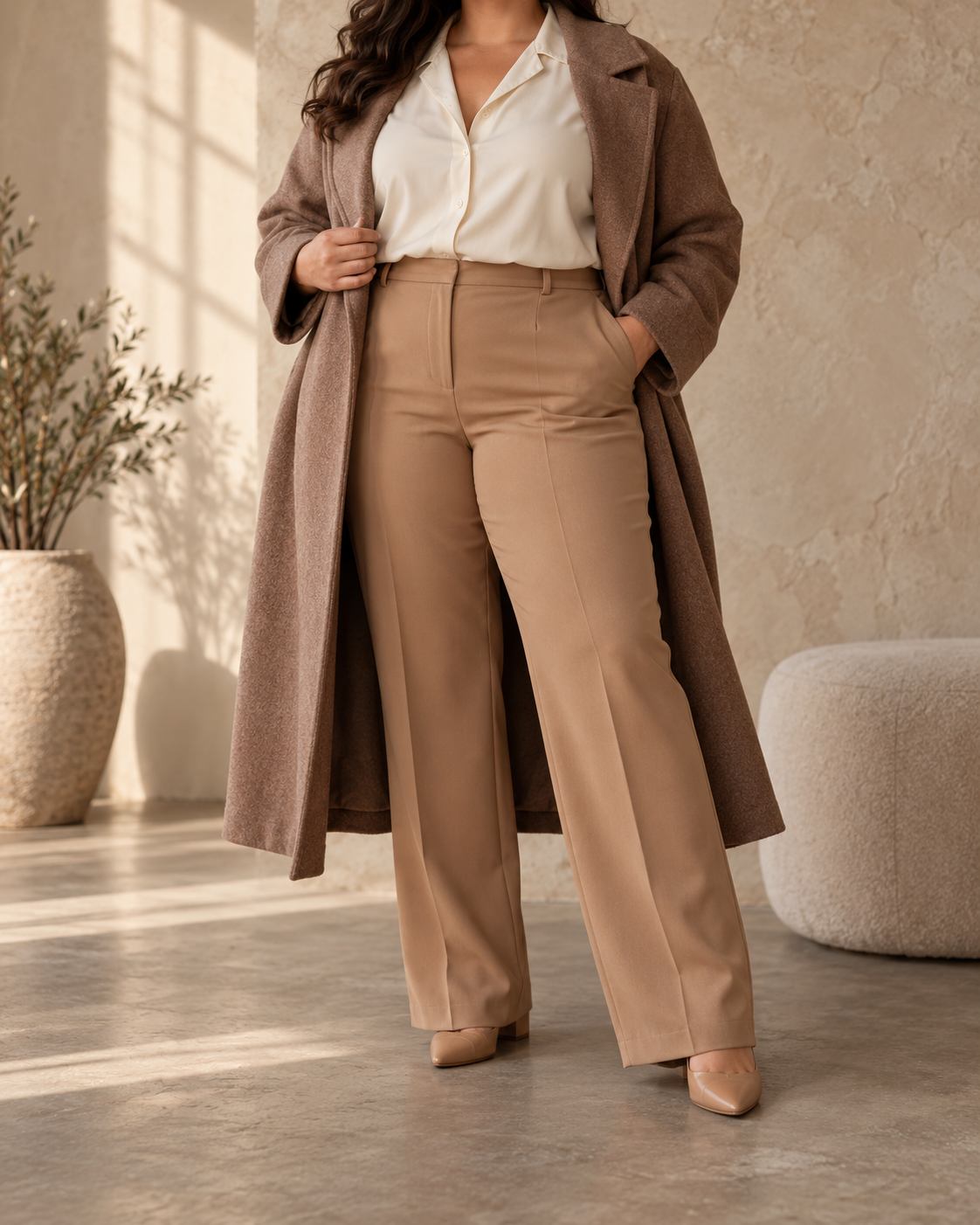
Wrap-inspired tops naturally point toward the waist and pair well with wide legs. Choose a neckline and wrap closure that stay secure when you move. A camisole underneath can provide coverage without changing the shape. Avoid styles that rely on constant adjustment.
Cropped Jackets
A jacket ending near the waistband reveals more of the trouser line and works well over a simple tee. Denim, leather, utility, and bouclé jackets all create different moods. The jacket does not have to end at the smallest part of your body; it only needs to relate clearly to the pants.
Longer Tops Can Work Too
You do not have to tuck everything. A tunic, long shirt, or sweater can work when it has movement, side slits, or a shaped hem. Keep the pants long and fluid, then let a visible shoe finish the outfit. A long top with a very stiff, full pant can feel cumbersome, so change one fabric or proportion rather than rejecting the idea entirely.
What to Wear for Work
Pair tailored wide-leg trousers with a knit shell and blazer, a tucked blouse and loafers, or a fine sweater and ankle boots. Keep belts optional. If a belt presses while seated, the waistband and tuck can provide enough structure on their own.
What to Wear Casually
Wide-leg jeans or ponte pants work with a crew-neck tee, sweatshirt, tank and cardigan, or relaxed striped shirt. Sneakers keep the look practical. For more denim-specific help, see our wide-leg jeans styling guide.
Simple Tucking Options
- Full tuck: smooth the fabric around the waistband instead of gathering everything at the front.
- Front tuck: tuck a small center section and let the sides fall naturally.
- Side tuck: useful with an asymmetrical or oversized shirt.
- No tuck: choose a deliberate hem length or add an open layer.
Common Problems
If the outfit feels bulky, switch to a smoother base or lighter outer layer. If your torso feels shortened, try a lower contrast between top and pants or expose slightly more waistband. If the top rides up, look for a longer length or use a bodysuit only if it is genuinely comfortable.
Frequently Asked Questions
Do tops have to be fitted with wide-leg pants?
No. Relaxed tops can work when the fabric drapes and there is a clear relationship at the waist or hem.
Can I wear a peplum top?
Yes. A softer peplum with a defined seam can sit neatly over the waistband. Check that the flare and pockets do not compete for the same space.
What jacket works best?
Cropped jackets reveal the pant line, while long coats create a strong outer column. Choose based on weather, comfort, and the look you want.
Final Styling Note
The best top is the one that lets the pants move and gives the outfit a clear focal point. Start with fit, decide whether you want to show the waistband, then add a layer only when it serves the weather or occasion.
Match the Top to the Fabric of the Pants
Fluid crepe trousers already have movement, so a smooth knit shell, crisp shirt, or fine sweater creates contrast without adding extra volume. Structured denim can hold a relaxed tee, oversized button-down, or chunky cardigan more easily. Linen pants look natural with a breathable tank or open shirt, but consider opacity and wrinkling when planning a work outfit. Ponte and tailored wool blends often pair well with a blouse or knit polo. The pant fabric tells you how much structure the upper half needs for the mood you want.
Check Where the Hem Lands
Try the top untucked first. A hem ending near the waistband or upper hip usually lets the wide leg remain visible. Longer shirts can work too, especially if left open over a shorter base or made from fabric that moves rather than stands stiffly. If a blouse gathers over the pockets, try a small front tuck or a shorter cut. The goal is a comfortable transition between top and trouser, not a prescribed waist shape.
Three Outfit Formulas
For a casual day, pair dark wide-leg jeans with a striped tee, cropped utility jacket, and sneakers. For work, combine black draped trousers with a tucked ivory knit shell, relaxed blazer, and loafers. For dinner, try chocolate wide-leg pants with a satin blouse, simple earrings, and ankle boots. Each outfit uses a different top texture and level of structure while leaving the trousers room to move.
Fit Questions to Answer in the Fitting Room
Sit down in the pants with the top you plan to wear. Does the shirt pull across the bust or slide out of the waistband? Can you lift your arms without the top riding up? Does a tucked fabric bunch at the zipper? Try the outfit with the actual shoes because hem length can change the balance. Small adjustments to fabric, length, or size usually solve more than adding another accessory.


One Comment