How to Style Straight-Leg Jeans for a Plus Size Figure 👖
Straight-leg jeans are one of the most useful denim shapes because they sit between skinny and wide-leg styles. The leg falls in a mostly straight line from the hip or thigh to the hem, giving you room to move without creating a very full silhouette. For a plus-size figure, the best pair is not the one that promises to make you look smaller. It is the pair that fits securely at the waist, sits smoothly through the rise, and works with the shoes and tops you already enjoy wearing.
This guide explains how straight-leg jeans should fit, what lengths are easiest to style, and how to build outfits without relying on rigid body-shape rules.
How Straight-Leg Jeans Should Fit
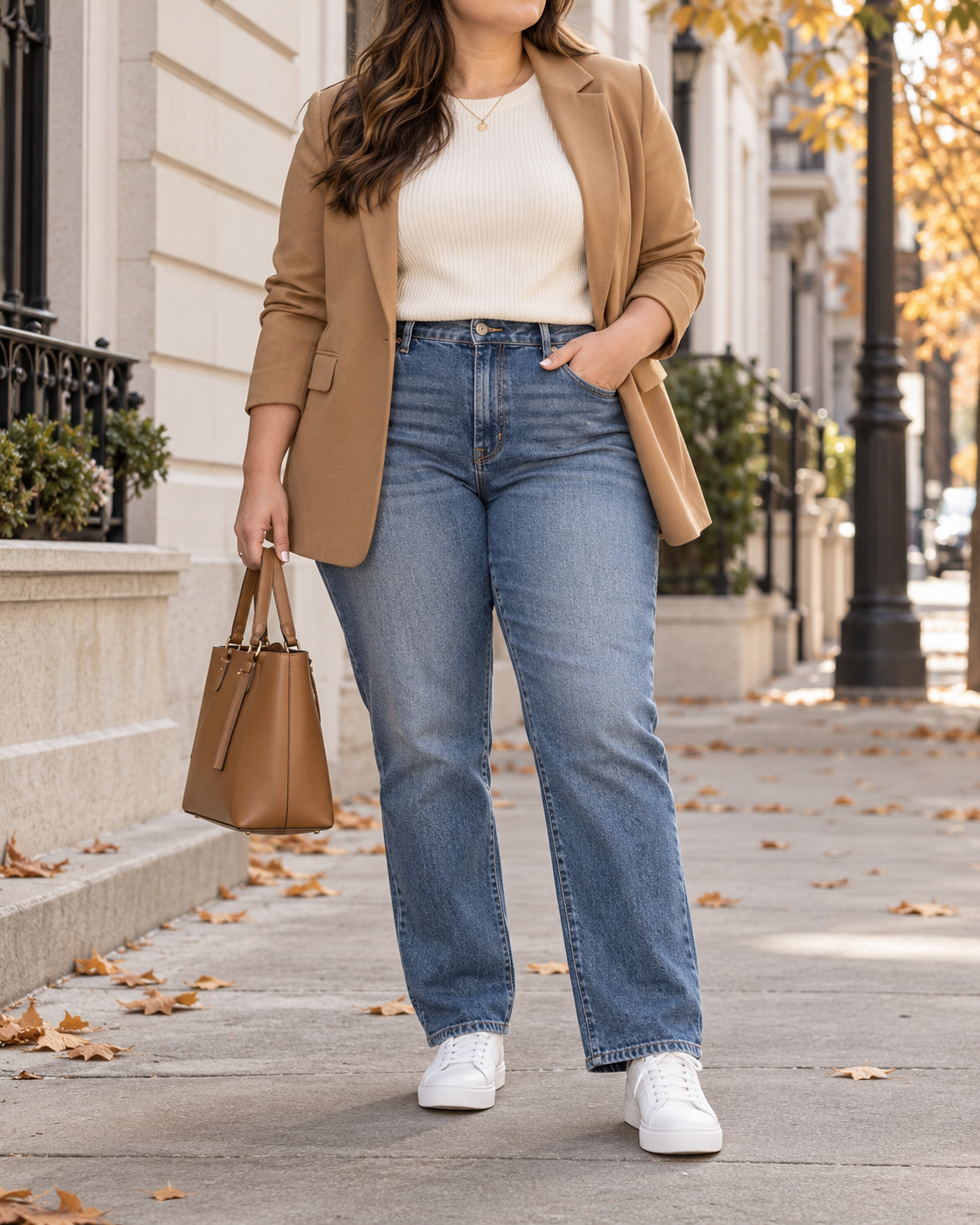
A straight jean should feel secure at the waist without digging when you sit. The fabric may skim the hips and thighs, but it should not pull into strong horizontal lines across the front. From the thigh downward, the leg opening stays relatively consistent instead of narrowing tightly at the ankle.
Do a simple movement test before deciding: sit, walk, bend, and lift one knee. Check that the waistband stays in place, the zipper does not buckle sharply, and the back rise gives enough coverage. If the waist fits but the hips feel restricted, look for a curvy-fit cut with a greater waist-to-hip difference rather than sizing up until the waist gaps.
Straight-Leg vs Skinny Jeans
Skinny jeans narrow closely from the thigh to the ankle. Straight jeans maintain more room through the calf and finish with a wider opening. That extra space changes the visual line and makes straight jeans easier to pair with loafers, ankle boots, sneakers, and flats.
You do not need to abandon skinny jeans if you like them. Straight denim simply offers another option when you want a less fitted leg or need a hem that sits more easily over a shoe.
Choose a Rise That Stays Comfortable
High-rise jeans can create a defined waistband and work well with tucked tops, but they are not automatically better. A mid-rise pair may feel more comfortable if a high waistband presses into your rib cage when seated. The useful rise is the one that stays where you put it and does not require constant adjustment.
Pay attention to the front and back rise measurements rather than relying only on the words “mid” or “high.” Two brands can label very different fits the same way. A contoured waistband can also help the jeans follow the body without leaving a large gap at the back.
Find the Right Hem Length
An ankle-length straight jean usually finishes at or slightly above the ankle bone. It creates a deliberate break before loafers, flats, or low-profile sneakers. A full-length straight jean can touch the top of the shoe or form one soft break. If several folds stack around the ankle, the pair may be too long for the look you want.
Always try jeans with the shoes you expect to wear most. A hem that works with sneakers may feel too long with ballet flats, while a cropped pair can look shorter with a high-shaft boot. Temporary fashion tape or a single cuff helps you test a different length before paying for alterations.

1. Straight Jeans, Fitted Tee, and Open Cardigan
Begin with a simple base: straight jeans, a fitted or gently shaped tee, and an open cardigan. The tee gives the outfit a clear foundation, while the open layer adds movement without hiding your shape. Choose a cardigan that ends at the waist, upper thigh, or anywhere between based on the balance you prefer.
Finish with loafers for a polished feel or sneakers for an everyday version. A small front tuck is optional. You can also leave the tee untucked if its hem falls smoothly instead of bunching underneath the cardigan.
2. White Button-Down and Brown Loafers
A relaxed white shirt makes denim look crisp without becoming formal. Roll the sleeves, open one or two buttons at the neck, and try a half tuck if a full tuck feels restrictive. Dark-wash jeans and brown leather loafers create a particularly useful fall combination.
Keep the shirt roomy enough across the bust and upper arms. If standard button-downs pull at the chest, look for stretch poplin, hidden bust buttons, or a shirt cut specifically for a fuller bust.
3. Fine-Knit Sweater and Ankle Boots
Choose a fine or medium-weight sweater that can sit neatly at the waistband. With ankle boots, either let a full-length hem fall over the shaft or use an ankle-length jean that leaves a small, intentional gap. Avoid forcing a bulky cuff into a narrow boot because it can distort the straight line.
A tonal palette—such as dark denim, navy knit, and black boots—looks calm and modern. Add contrast with a camel coat or burgundy bag.
4. Blazer, Tank, and Clean Sneakers
This outfit is useful for casual work settings, lunch, or travel. Wear a comfortable tank or tee under a softly structured blazer, then add straight jeans and white or cream sneakers. The blazer supplies polish, while the denim and sneakers keep the outfit relaxed.
Check that you can comfortably cross your arms in the blazer. A garment that hangs beautifully but restricts movement will not become a reliable wardrobe piece.
5. Denim-on-Denim With Clear Contrast
Pair medium or dark straight jeans with a lighter chambray shirt or denim jacket. A clear difference in wash makes the combination feel intentional. Add a cream tank between the pieces and finish with tan boots or sneakers.
If you prefer a matching denim look, vary the texture instead: rigid jeans with a soft shirt, or faded denim with a crisp jacket.
6. Long Coat and Simple Knit
A long coat creates a strong outer line over straight denim. Wear a simple crew-neck knit underneath and keep the shoes streamlined. The coat can finish at the knee, mid-calf, or another length that works with your height and daily routine.
There is no need to avoid long coats because you are curvy. Look for enough room across the upper arms and hips so the coat hangs rather than catches.
7. Cropped Jacket and Full-Length Jeans
A waist-length utility, leather, or denim jacket pairs especially well with full-length straight jeans. The shorter outer layer reveals more of the jean line and creates a clear meeting point near the waist. Wear a longer fitted top underneath if you want more coverage when reaching or sitting.
8. Tunic-Length Shirt and Ankle Jeans
If you enjoy longer tops, combine a tunic-length shirt with ankle jeans and a visible shoe. The shorter denim hem keeps the outfit from becoming one uninterrupted block. Choose a tunic with side slits or a curved hem so it moves easily over the hips.
Loafers, pointed flats, or low boots all work. The shoe does not need to be delicate; choose enough sole and support for your actual day.
9. Monochrome Black With Texture
Black straight jeans, a black knit, and black loafers form a simple monochrome base. Prevent the outfit from feeling flat by mixing textures: washed denim, ribbed knit, smooth leather, and perhaps a wool coat. Small differences in black and charcoal add depth rather than looking mismatched.
10. Graphic Tee and Tailored Coat
A graphic tee adds personality to straight denim. Layer a tailored coat or blazer over it and choose sneakers or loafers depending on the occasion. Keep the print as the focal point by using a simple bag and minimal jewelry.
What Shoes Work Best?
- Sneakers: easy with ankle or full-length jeans; leave the hem clean rather than stacked.
- Loafers: particularly effective with ankle-length dark denim.
- Ankle boots: wear the hem over the shaft or leave a small gap; avoid awkward bunching.
- Ballet flats: work well when the hem reveals most of the shoe.
- Heeled boots or pumps: useful when you want a dressier line, but never required.
If you are comparing denim shapes, our wide-leg jeans styling guide explains how a fuller leg changes the top and shoe balance. You can also see more combinations in our guide to shoes for wide-leg jeans.
Common Fit Problems and Practical Fixes
The waist gaps but the hips fit
Try a curvy-fit cut or a contoured waistband. A tailor can also take in the center back without changing the hip fit.
The knees become baggy quickly
Look for denim with good recovery and a modest amount of stretch rather than very thin, highly elastic fabric. Washing less frequently and allowing jeans to air-dry may also help them keep their shape.
The jeans twist around the leg
This can come from seam construction rather than your body. Try another pair or brand instead of assuming you need to size differently.
The front pockets flare
Check for pulling through the hip and rise. A different cut with more hip room or deeper pockets may sit more smoothly.
Frequently Asked Questions
Are straight-leg jeans flattering for plus-size women?
They can look excellent, but “flattering” is not a fixed body rule. Straight jeans offer a clean line and useful shoe compatibility. The most important factors are comfortable fit, intentional length, and an outfit that feels like you.
Should straight jeans be tight on the thighs?
They may skim the thighs, but they should not restrict walking or create heavy pulling. Some styles are slim-straight while others are relaxed-straight, so choose the amount of ease you prefer.
Can I wear straight jeans if I carry weight in my stomach?
Yes. Test different rises and waistbands while seated. A flexible mid-rise, contoured high rise, or pull-on style may each work; comfort matters more than following a universal recommendation.
Final Styling Note
A reliable straight-leg jean should make outfit building easier. Start with the fit and hem, pair the jeans with shoes that suit the length, and then choose a top based on the level of polish you need. A tee and cardigan, button-down and loafers, or knit and boots can all work without changing your body or hiding it.



One Comment